The room
A custom-built studio in Kitsilano where musicians, equipment, and commercial recording work met every day.
The voice behind the record
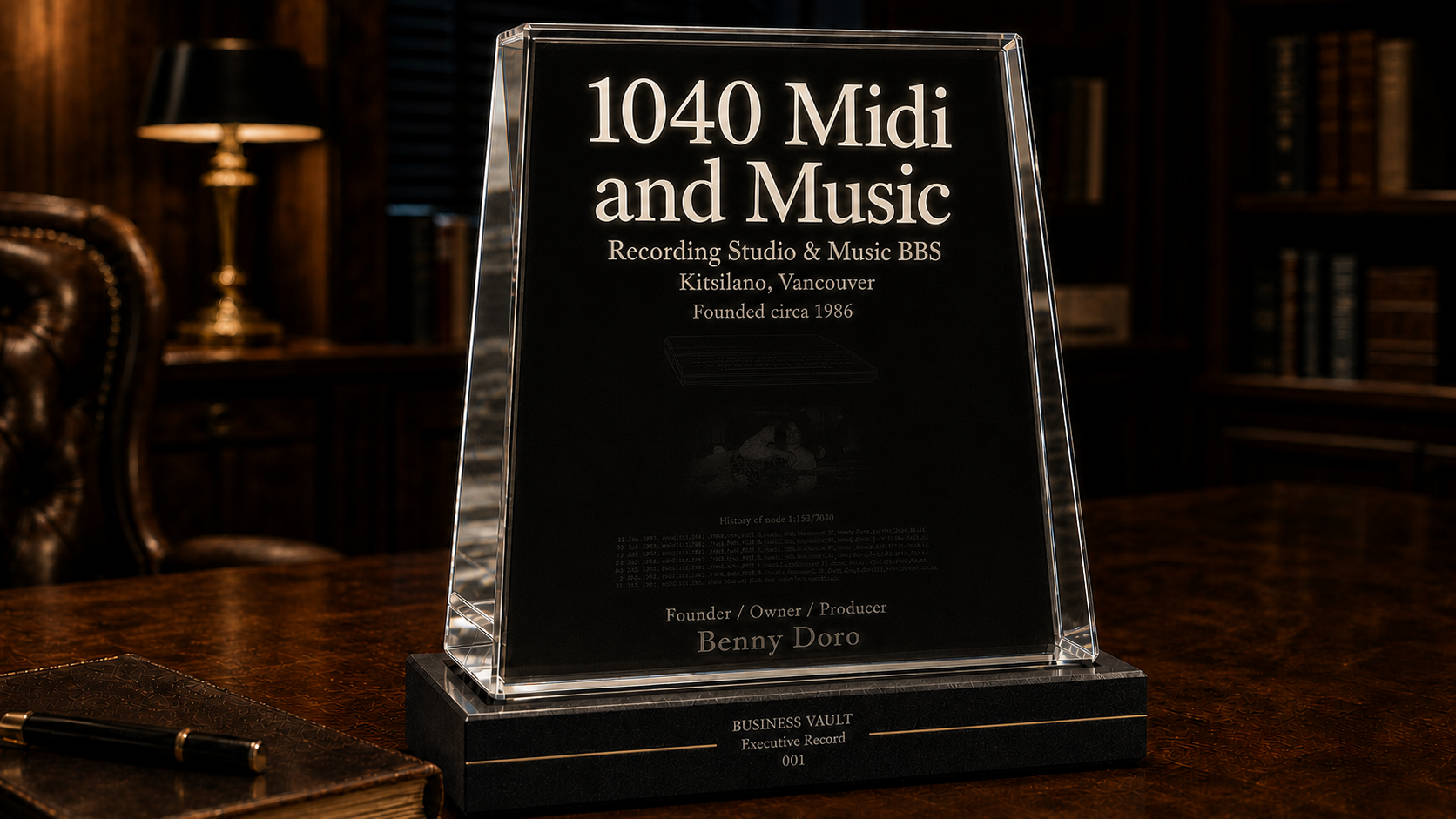
Benny Doro
Executive Record 001
Why this Tombstone matters 7 minutesListen while you explore.
Lightly edited for readability. Technical names and terminology have been standardized; the meaning and speaking voice are preserved.
Once upon a time, there was a band called Unchained. Unchained wanted to make some music and record it, so we needed a place to do it. I talked my parents into giving me their basement, and we started assembling a recording studio.
I was already a gearhead back then, and I realized it wasn’t just a tape machine anymore. There was a thing called a computer and MIDI, so I dove right into that. I got an Atari 1040 ST. That became the centerpiece of the studio. Once we realized I could trigger drums and keyboards without using up space on a tape machine, it was pretty mesmerizing.
We put a studio together. We had an Akai eight-track recorder that used cassettes like Beta tapes. We used one track for SMPTE to hook into the 1040 ST, which ran SMPTE Track—the big music software back then. MIDI cables came out of there into splitters and went all over the place, and we had ourselves a studio where we could record.
Somewhere along the line, someone gave me a modem. I thought, “What is this?” I think it was my friend Matt Ion, who was doing some studio work there. The first time I had a modem hooked up and connected to anything, it was magic. “Oh my God, look where we can connect on a computer. We can do all kinds of stuff.” We had to dial long distance to Calgary, but we could get there.
Thus was born 1040 Midi and Music BBS. We wanted to make a bulletin board system focused on music and MIDI. You could exchange MIDI files that were very small because they were just numbers telling keys to go off or on, how long to stay on, and how hard to be hit—called velocity. We made this central for music, and next thing I knew, people were signing up like crazy. We were onto something.
We had Maximus BBS software—I believe that was it; I’m sure Matt is going to correct me here—and we had a super modem. Maybe it was 2400 baud in the beginning. Eventually we got a 14.4. Calls came in, and we always got excited watching who was logging in and grabbing files.
Then, I think it was 1992, we became what was called a FidoNet node. This was the beginning of email. You could log on to the BBS, get an account, and there was a section that said “Send messages.” Everybody received a FidoNet email address. It was a bunch of numbers, the at sign, and FidoNet—that was your mailbox.
You would write a message and it would stay on our computer in your mailbox. At midnight every night, the BBS would shut down and the FidoNet software would run. It would take all the messages and start bundling and organizing them. Then it would call the next computer—maybe in Edmonton or Kelowna. Kelowna called Calgary, Calgary called Winnipeg, Winnipeg called Toronto, somebody with room on a credit card called London, and London called Germany.
All these computers would connect and exchange packets of mail. This went on for a couple of hours. Once everybody had their mail, the computers disconnected and the mail unpackers started. When it was done, you couldn’t wait to run your computer in the morning and call 1040 Midi and Music BBS.
You got a little ASCII sign that said “1040 Midi and Music,” made out of characters on the keyboard. You entered your username and password and waited to see. This was way before “You’ve got mail.” It would literally say, “You’ve got mail. Read it now? Y/N.” You hit Y, all your mail lined up, and you chose a number to open it.
You might have a response from somebody in Japan or somebody down the street. Pretty cool. Sometimes they attached a MIDI file. You could upload files to a section of our BBS that had room for MIDI files or small graphics describing how to hook up keyboards. You could upload patches—programs on a keyboard that turned it into a different sound—or technical advice.
It was great. That’s how we started a community not only in Canada but around the world. We became the largest MIDI and music BBS ever, as far as I know. There may have been one in Chicago that was bigger, but they covered many other topics. We were strictly MIDI and music. It was fun to have while we were recording bands in the studio or recording ourselves.
We remained a FidoNet node until sometime late in the 1990s, when the internet showed up and we switched over. You can see in the Timeline where we stopped being a node, but those records are still online. You can look them up anytime. They are evidence of a time and place where it was a different world.
When I see kids today on their phones, communicating on chats with other countries, I think, “Man, they have no idea how it was before.” It’s the equivalent of your parents saying, “I walked two miles to school in the snow with one sneaker.” We had to have a modem. We had to dial up, connect, pay for long-distance calls, and wait a day for our mail. Yeah, yeah—we got it.
Anyway, I hope you enjoy it. This was one of the first ventures I had done at that time. It was in the Kitsilano area of Vancouver, and my parents were very nice to let us use the basement. We definitely took over—not only the basement, but the neighborhood. Enjoy.
Executive summary · 30-second read
The essential record before the archive opens.
Exhibit 01 · The story
1040 Midi and Music brought a working recording studio and a dial-up music community under the same roof.
A custom-built studio in Kitsilano where musicians, equipment, and commercial recording work met every day.
A music- and MIDI-focused bulletin board where files, technical knowledge, and community moved through telephone lines.
Technology was useful when it helped people make music, solve problems, and work together.
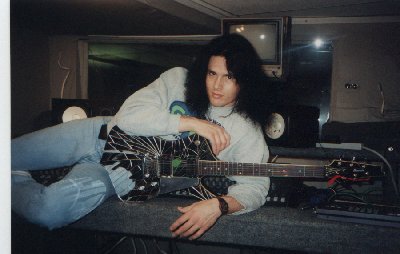
Exhibit 02 · The studio
The custom-built studio joined an Atari 1040, Emax samplers, an Akai recorder, and SMPTE synchronization into one working production environment. Custom copper grounding supported the room’s technical foundation.
Commercial work included bands, movie soundtracks, radio commercials, and Paul Stanley demo sessions.
Exhibit 03 · The BBS
Beginning circa 1986, the BBS developed around music, MIDI, and the practical exchange of files and knowledge.
FidoNet address
1:153/7040 1040 MIDI & Music BBS · Vancouver BCMusicians used the system to exchange MIDI files, synthesizer patches, programs, studio settings, and technical advice. Downloads moved through a modem, onto floppy disks, and into studio equipment.
The surviving FidoNet history records the node’s appearance in 1992, its move from 2400 to 9600 baud, later configuration changes, and its removal from the nodelist in 1997.
Matt Ion was a central technical figure in the BBS chapter. The surviving record documents the SysOp entry changing from Benny Doro to Matt Ion in December 1995.
Exhibit 04 · Original evidence
Open each surviving image to examine it at full scale. No reconstructed documents are included here.